Buyer answer: Class 2 vests cover roadwork, warehousing and utility crews working near traffic up to roughly 50 mph (80 km/h). Class 3 adds sleeve coverage, a larger minimum background area and more retroreflective material, and is the right choice for highway-speed traffic, night work, severe weather or complex backgrounds. Decide by job risk assessment, not by price, and confirm the class in writing on your specification before bulk production.
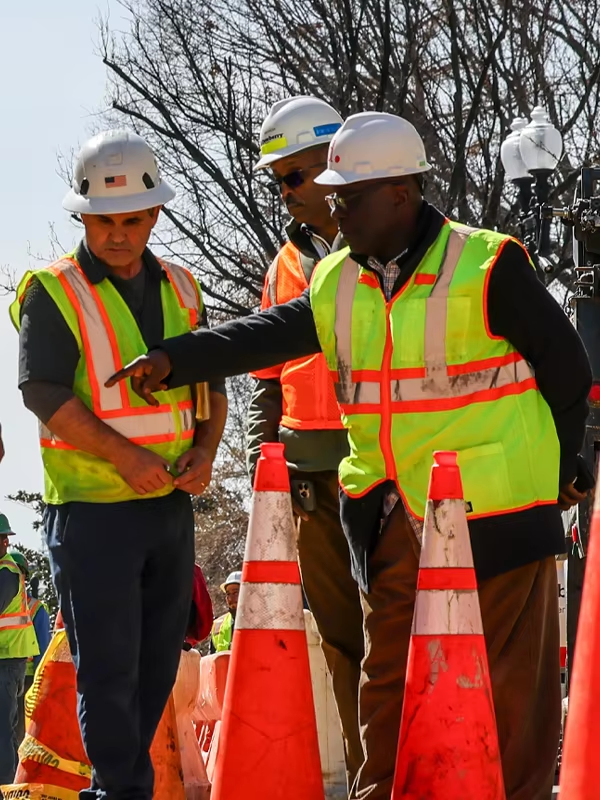
What Class 2 and Class 3 actually mean
ANSI/ISEA 107 defines high-visibility classes by the minimum area of fluorescent background material and retroreflective material on the finished garment. The class is a property of the garment design, not of the fabric alone: the same vest cut in size S and size 3XL must both still meet the minimum areas.
| Requirement | Class 1 | Class 2 | Class 3 |
|---|---|---|---|
| Background material | 0.14 m² (217 in²) | 0.50 m² (775 in²) | 0.80 m² (1,240 in²) |
| Retroreflective material | 0.10 m² (155 in²) | 0.13 m² (201 in²) | 0.20 m² (310 in²) |
| Sleeve coverage | none required | none required | required (sleeves or a vest-plus-pants ensemble) |
| Typical garments | short vests for low-risk parking areas | short vests, T-shirts for road-adjacent work | sleeved vests, jackets, T-shirt-plus-pants programs |
| Typical exposure | separated from traffic | traffic up to roughly 50 mph (80 km/h) | traffic above 50 mph, night work, severe weather |
Most B2B safety programs sit in Class 2 or Class 3. Class 1 appears mainly in controlled environments such as parking attendants or shopping-cart retrieval, where the risk assessment shows workers are separated from vehicle traffic.
Pick the class by job site
Risk increases with traffic speed, traffic volume, task complexity and reduced sight lines. A useful factory-side rule of thumb:
- Class 2 — road maintenance within city speed limits, warehousing and loading docks, airport ramp crews, event staff, utility work on urban streets.
- Class 3 — highway construction, night work or work during heavy rain and fog, flaggers and roadway surveyors on high-speed roads, railway and tow-truck crews, any task where the upper body must stay visible through arm movement.
When a crew works across both environments in one shift, buy the higher class. Specifiers in the U.S. public-sector market usually write the class directly into tender documents, so match the tender line exactly.
How the class changes garment design
The class decision reaches into every construction detail, which is why it must be locked before sampling:
- Fabric area. Class 3 needs substantially more fluorescent background, so small chest panels or heavy logo printing can push a design below the minimum.
- Tape layout. Class 2 vests use a horizontal band around the waist plus vertical suspenders over the shoulders. Class 3 adds bands around the sleeves, so tape consumption per garment rises and the tape pattern must wrap the arm, not just the torso.
- Pockets and black bottom panels. Pockets, zippers and contrast panels are allowed, but they must not reduce the visible background or retroreflective area below the class minimum in the smallest size produced.
- Layering. If crews wear jackets over vests, the jacket must also meet the class on its own, because a Class 3 vest hidden under a non-compliant jacket is not a Class 3 solution.
Confirm class compliance before bulk
Before you release a bulk order, put these points in the RFQ so the factory and your specification agree on the same class:
- State the target class and the standard edition (ANSI/ISEA 107-2020, EN ISO 20471:2013/A1, or both for dual-market programs).
- Ask the factory to confirm the smallest size in the range still meets the minimum areas, and to note it on the size chart.
- Agree the tape layout drawing and tape performance class before the pre-production sample.
- Request compliance documentation with the shipment: garment specification sheet and, for EN orders, the EC type-examination certificate reference.
- Freeze logo size and placement at sampling, so branding never eats into required background area.
Our standards and RFQ checklist page packs the same questions into a form you can send to any supplier, not only to us.
Frequently asked questions
Need this in a bulk RFQ?
Send quantity, target styles, logo file and destination market. We will reply with MOQ, lead time, customization options and documentation by email or WhatsApp.
Request a Quote WhatsApp Us