Buyer answer: Knitted polyester mesh wins for hot climates and high-activity crews because airflow matters more than snag resistance. Solid tricot polyester is the cost-effective default with the best print surface. 300D/600D Oxford panels add abrasion and tear resistance for surveyor-style and heavy-duty vests. Most programs mix them: mesh body for comfort, Oxford pocket panels for wear points.
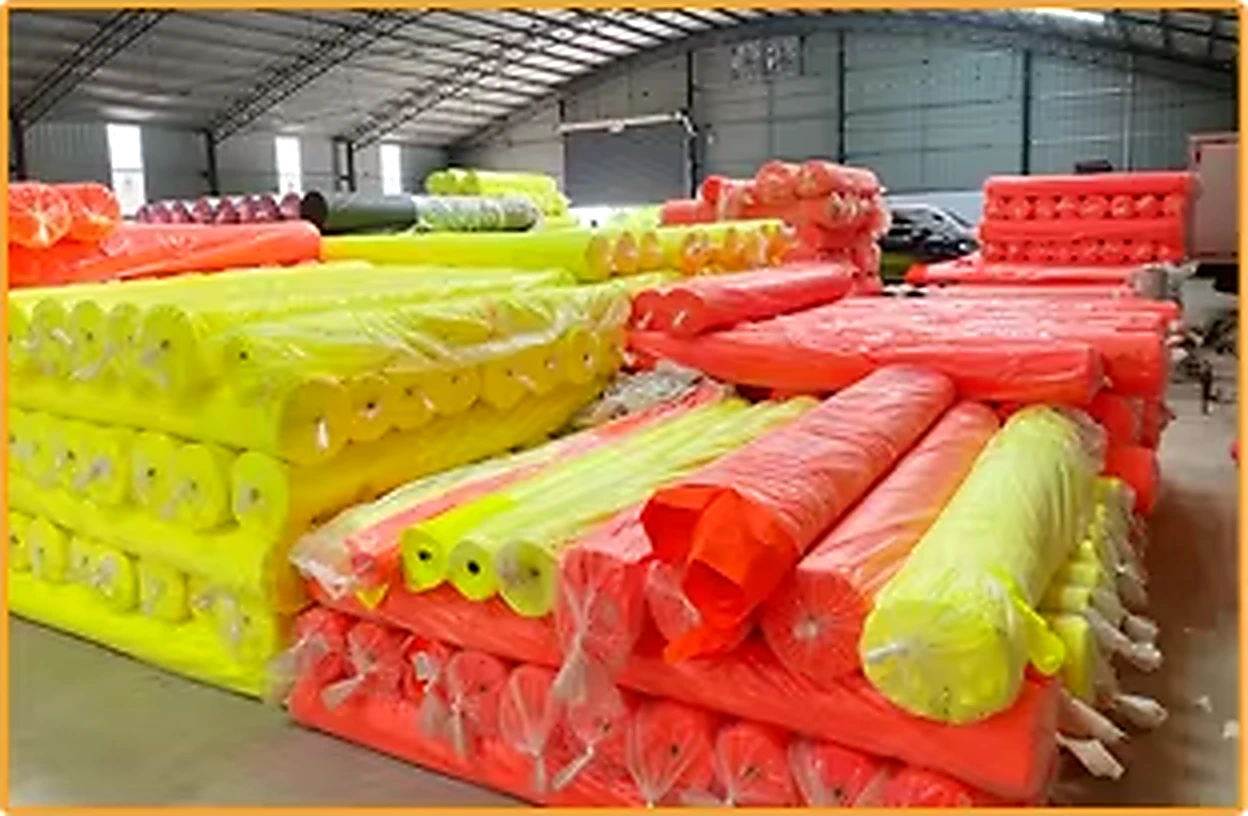
The three fabric families
Knitted polyester mesh is the workhorse of hot-weather vests. The open structure lets air move across the torso, keeps garment weight low and dries fast. Its trade-offs are lower snag resistance and a slightly less uniform print surface.
Solid tricot polyester (often 100–120 GSM knitted) is the standard vest body: smooth, stable for screen printing, economical, and available in the full lime and orange range. It is the fabric most buyers picture when they say “standard vest.”
Oxford weave polyester (300D or 600D) is the heavy option. It resists abrasion on pocket edges, tool contact and ground work, which is why surveyor vests, jackets and cold-weather styles use it — often as panels rather than the whole garment.
Fabric comparison table
| Factor | Knitted mesh | Solid polyester | 300D/600D Oxford |
|---|---|---|---|
| Breathability | excellent | good | limited |
| Snag & abrasion resistance | lower | moderate | high |
| Screen-print result | good with mesh-friendly ink | best | good |
| Typical weight | ~60–110 GSM | ~100–120 GSM | ~200+ GSM |
| Relative cost | lowest | low | higher |
| Best for | summer roadwork, logistics, events | general programs, branded vests | surveyor styles, winter, heavy-duty crews |
How fabric choice affects compliance and tape
Compliance is driven by garment geometry, but fabric choice still reaches it. Mesh styles need enough solid background area to hold the class minimum, so heavily meshed designs carry proportionally more solid panels. Tape sewing also differs: open mesh wants narrower stitch lines and backing tape to keep the seam tight, while Oxford holds a wider tape cleanly.
If your program mixes short-sleeve T-shirts with vests, remember the T-shirt fabric (usually a heavier interlock or quick-dry polyester) is a fourth family with its own print and wash behavior.
Matching fabric to program
- Utilities and oil & gas in hot regions: mesh body, solid chest panels for ID and logo, quick-dry finishes.
- Distributor private-label programs: solid polyester for print consistency across repeat orders.
- Surveyor and highway crews: Oxford pocket panels, heavier zippers, double-stitched wear points.
- Rain programs: the fabric decision moves to PU-coated Oxford and seam sealing — see our safety rainwear category.
When you send an RFQ, name the fabric per position (body, pockets, trim). It removes the most common source of sample-stage surprises.
Frequently asked questions
Need this in a bulk RFQ?
Send quantity, target styles, logo file and destination market. We will reply with MOQ, lead time, customization options and documentation by email or WhatsApp.
Request a Quote WhatsApp Us