Buyer answer: Screen printing is the cost-effective choice for one- to three-color logos at production volume. Heat transfer handles full-color artwork, gradients and small text with a softer feel. Embroidery gives a premium raised texture and suits Oxford panels, jackets and polos, but is too heavy for lightweight mesh. Whichever method you pick, keep the logo clear of reflective tape and inside the area agreed at sampling so the garment stays compliant.
The three branding methods
Screen printing pushes ink through a mesh screen, one screen per color. It is fast at volume, economical for one- to three-color logos, and with mesh-friendly inks it holds up on open-knit vests. Cost per piece falls as quantity rises, which is why most bulk vest programs brand this way.
Heat transfer presses a pre-printed film onto the fabric. It reproduces full-color logos, gradients and small registration text that screens cannot hold, with a softer hand feel. Each piece carries the transfer cost, so it suits lower quantities or artwork that changes often.
Embroidery stitches the logo with thread. It is the most durable and premium-looking option and sits best on stable fabrics: Oxford pocket panels, jackets, polo plackets. On lightweight mesh it puckers the fabric and adds stiffness, so we recommend it only on solid panels.
Method comparison table
| Factor | Screen print | Heat transfer | Embroidery |
|---|---|---|---|
| Color detail | 1–3 colors typical | full color, gradients | thread colors, no gradients |
| Best fabric | tricot polyester, mesh with proper ink | solid fabrics, T-shirts | Oxford panels, jackets, polos |
| Durability | very good | good | excellent |
| Economical at | 300+ pcs per design | any quantity | small logos, any quantity |
| Feel | ink hand | soft, thin | raised texture |
Artwork requirements
- Send vector files (AI, EPS or PDF) for screen print and embroidery; high-resolution PNG works for heat transfer.
- Provide Pantone references for brand colors, or ask the factory to match from a printed swatch.
- State the target print size and position per position (left chest, back, shoulder), not just “logo on chest.”
- For repeat programs, request a kept print screen or film so reorder color matches the first run.
Placement and compliance
Branding interacts with the visibility standard in two ways: a logo must not cover retroreflective bands, and it must not reduce the fluorescent background below the class minimum in the smallest size produced. In practice that means logos sit on the chest or back panel between tape bands, and the sampling stage locks both size and position.
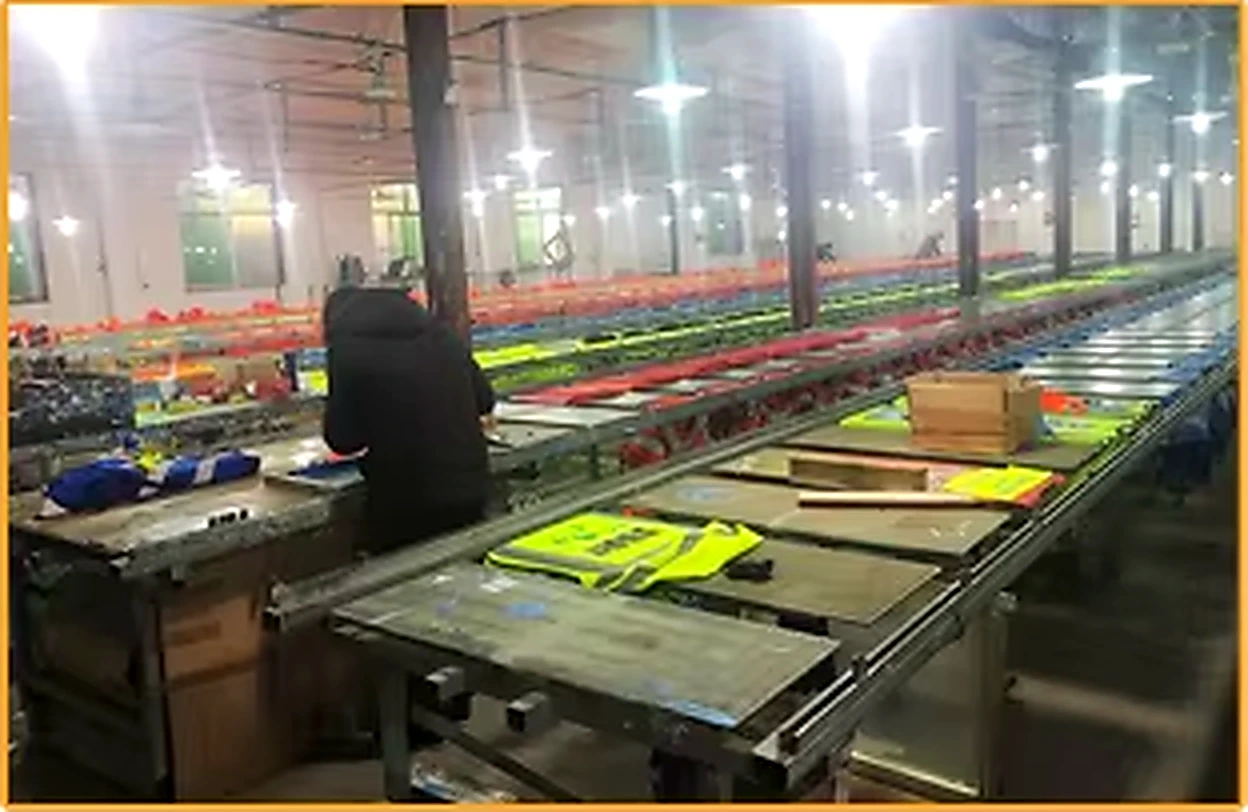
Branding does not stop at the print. The same customization logic applies to woven neck labels, heat-transfer size labels, reflective-transfer logos on tape lines, and private packing — polybags, barcode labels and carton marks. Our factory capability page shows where each of these happens on the production line.
Frequently asked questions
Need this in a bulk RFQ?
Send quantity, target styles, logo file and destination market. We will reply with MOQ, lead time, customization options and documentation by email or WhatsApp.
Request a Quote WhatsApp Us